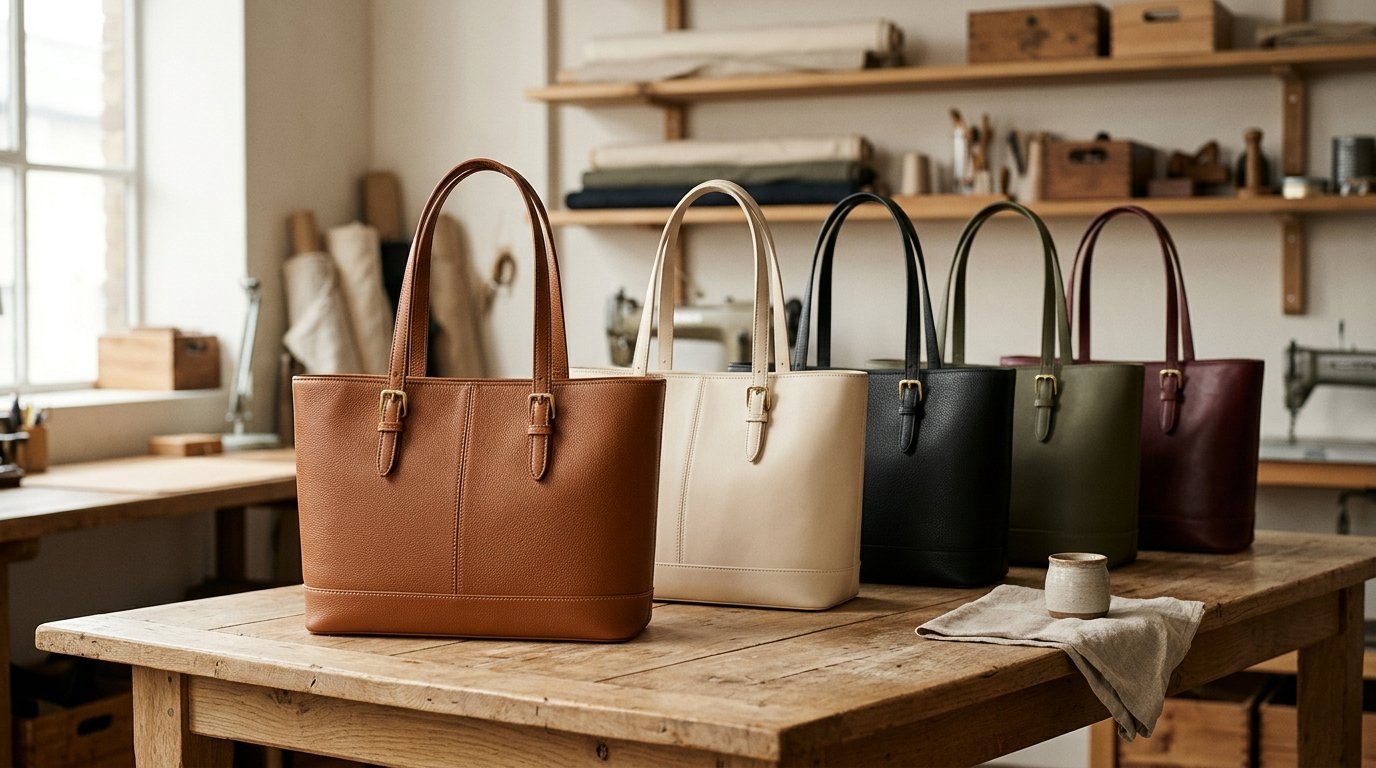
Sourcing wholesale handbags from China is still one of the fastest ways for B2B buyers to build a profitable catalog in 2026 — but the game has changed. Alibaba is more crowded, buyers are more cautious, and shipping costs swing month to month. This guide walks you through the exact process we use at Leuzon when onboarding new handbag suppliers: from shortlisting factories to landing the first container without surprises.
Why China Still Dominates Wholesale Handbags
China produces roughly 60% of the world's leather goods and synthetic bags, concentrated in three clusters: Guangzhou (leather and PU), Yiwu (low-MOQ trading), and Xiamen (premium OEM/ODM). Each cluster has different MOQs, lead times, and quality ranges — and choosing the right one matters more than the factory's star rating on B2B platforms.
Step 1: Define Your Sourcing Brief Before You Contact Anyone
Suppliers respond 3–4× faster when your first message reads like a professional brief, not "send me your catalog." A good sourcing brief includes:
- Product type — tote, crossbody, backpack, clutch, or mixed SKU list.
- Material — genuine leather, PU, microfiber, canvas, or recycled.
- Target price band — FOB price range per unit, not retail.
- MOQ tolerance — how many units per SKU you can commit to.
- Compliance — REACH, CA Prop 65, or CPSIA if selling in the EU/US.
- Timeline — sample needed by, first shipment needed by.
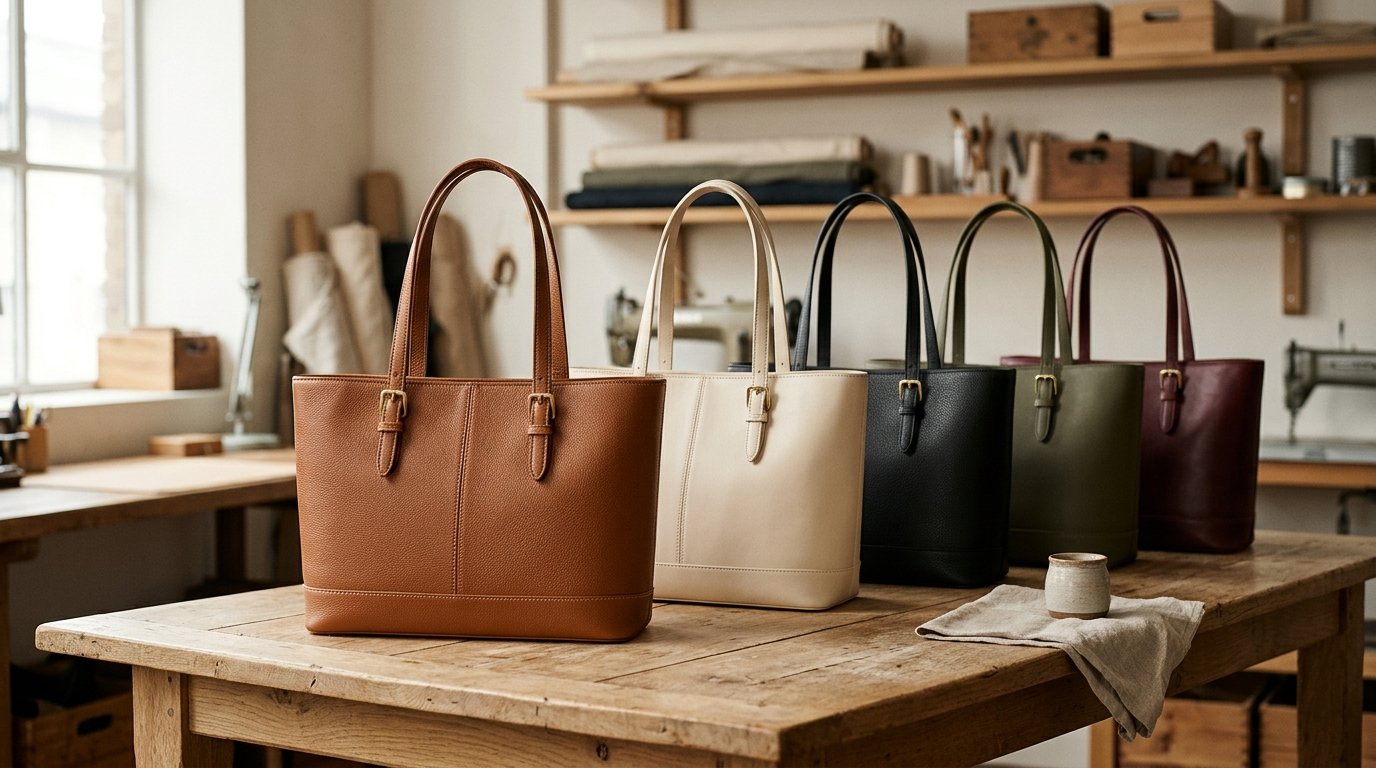
Attach 2–3 reference images. This alone filters out 70% of suppliers who can't meet your spec.
Step 2: Vetting Suppliers in 2026
Alibaba is a discovery tool, not a vetting tool. Before you send a sample deposit, verify:
- Business license — cross-check the company name on China's National Enterprise Credit Information Publicity System.
- Factory vs. trading company — ask for a video walkthrough of the production floor with a timestamp.
- Export history — request 2–3 shipping documents from the last 12 months (destination and product blurred is fine).
- Certification — ISO 9001, BSCI, or Sedex audit reports if you're selling to large retailers.
- Payment terms — reputable suppliers accept 30/70 via T/T against a proforma invoice; avoid anyone pushing 100% upfront.
Step 3: Negotiating MOQ and Price
The MOQ advertised on a listing is rarely final. Three levers work reliably in 2026:
- Mix SKUs — commit to 300 units total across 3–4 styles to hit the MOQ per style.
- Take the supplier's stock colors — custom Pantone matching adds 15–30 days and often a surcharge.
- Order a trial lot first — most factories will accept 50–100 units at a 10–15% premium for the first order.
A realistic FOB price for a mid-range PU tote in 2026 sits between $4.80 and $7.50; genuine leather totes start around $18 and climb with lining and hardware quality.
Step 4: Sample Approval and Quality Control
Never approve a bulk order from photos alone. The three-stage QC process that saves the most money:
- Pre-production sample — check stitching density (8–10 stitches per inch), hardware plating, zipper smoothness, and smell.
- During-production inspection — send a third-party inspector (SGS, QIMA, or a local agent) when 30% of production is complete.
- Pre-shipment inspection — AQL 2.5 major / 4.0 minor is the industry default for bags.
Budget $250–$400 per inspection. It is the cheapest insurance you'll ever buy.
Step 5: Shipping and Landed Cost
For handbags, three shipping modes matter:
- Air express — 5–8 days, best for samples and urgent SKUs, $6–$9/kg.
- Air freight — 10–14 days, $4–$6/kg, ideal for 100–500 kg.
- Sea freight LCL — 30–45 days, $60–$120 per CBM, best for 500+ units.
Add roughly 12–18% on top of FOB for freight, insurance, duties (typically 8–17% for handbags in the US/EU), and port fees. That's your landed cost — always negotiate from that number, not FOB.
Step 6: Customs and Compliance
Handbags are subject to labeling rules in most major markets. Before your first container lands, confirm:
- Country of origin is printed on a sewn-in label (not just the hangtag).
- Material composition is disclosed on the care label.
- For the EU, REACH restricts certain azo dyes and heavy metals in leather goods — request a test report from the supplier.
- For the US, CPSIA applies if the bag is marketed for children.
Common Mistakes B2B Buyers Make
- Ordering from the cheapest quote — quality variance on handbags is enormous.
- Skipping the pre-shipment inspection to save $300 — and losing $8,000 on rejects.
- Approving samples by photo only. Always hold the sample in your hand.
- Forgetting landed cost when pricing. Freight can erase your margin.
- Not signing an NDA before sharing your designs.
Final Checklist Before You Place Your First Order
- Supplier's business license verified on the government portal.
- Factory video walkthrough received with timestamp.
- Proforma invoice signed, 30% deposit sent via T/T.
- Pre-production sample approved in hand.
- Third-party inspection booked for 30% production completion.
- Freight forwarder quoted in writing with an all-in landed cost.
- Customs broker briefed on HS code and origin labeling.
If you'd like help shortlisting suppliers or running QC on a first order, our sourcing team at Leuzon can walk you through it. Get in touch →